
Live casino game shows have transformed the gambling entertainment landscape over the past decade, blending the visual spectacle of television with the excitement of real-money wagering. These experiences sit at the intersection of traditional casino gaming and modern entertainment broadcasting, featuring live hosts, dynamic bonus rounds, and high-production-value sets that evoke classic game shows like The Price Is Right and Deal or No Deal. Pioneering titles from Evolution Gaming—such as Dream Catcher, Crazy Time, and Monopoly Live—set the standard for this category, attracting millions of players through online live dealer lobbies and, increasingly, on-property casino installations.
Within the context of Native American tribal gaming, live game shows represent a strategic opportunity to modernize casino floors, attract diverse player demographics, and compete with large commercial resorts. Indian casinos, operated under federal tribal gaming authority via the Indian Gaming Regulatory Act (IGRA), have traditionally anchored their entertainment around Class II bingo-style games and Class III casino-style offerings such as slots, table games, and now live dealer experiences. Plinko-style game shows—featuring ball drops through peg boards and probabilistic multiplier paths—have emerged as a particularly engaging subset of this category, offering a gentler, more entertainment-focused alternative to high-intensity table gaming. Understanding how these games fit into tribal gaming ecosystems, from regulatory compliance to floor design and player experience, is essential for operators seeking to balance innovation with cultural integrity and responsible gambling principles.
Understanding Indian Casinos and Live Game Show Categories
Native American Gaming and Class III Casino-Style Games
Native American gaming has operated under a specialized federal framework since the Indian Gaming Regulatory Act of 1988. This legislation established three classes of gaming: Class I (tribal ceremonial or traditional games), Class II (bingo and bingo-like games), and Class III (casino-style games including slots, table games, and sports betting). Most tribal casinos generate significant revenue from Class III operations, which require negotiations between tribes and states through gaming compacts that define allowable games, technical standards, and regulatory oversight.
The backbone of Indian casino floors traditionally consists of Class III offerings—slot machines, blackjack, craps, roulette, and poker tables. Over the past decade, live dealer games and digital game shows have been integrated into Class III frameworks, as they involve RNG (random number generation) technology and house-derived odds similar to traditional casino games. This categorization has important implications for how live game shows, including Plinko-style variants, are licensed, audited, and promoted within tribal territories. Operators must ensure that any new game format complies with their specific tribal-state compact language and passes technical certification by the tribe’s gaming commission.
From Traditional Tables to Live Game Show Entertainment
The evolution from purely traditional casino floors to entertainment-focused gaming environments reflects broader industry trends and changing player preferences. A decade ago, tribal casinos competed primarily on slot volume, table game selection, and amenities like dining and hotels. Today, casinos increasingly recognize that live game shows create visual spectacle, extend average session time, and appeal to players who might not feel comfortable at a high-stakes blackjack table or intimidated by complex table rules.
Live dealer game shows occupy a unique middle ground: they retain the structured gameplay and RNG fairness of electronic games while introducing the theatrical elements, personable hosts, and narrative momentum that resonate with television audiences. For tribal casinos, this shift aligns with a broader strategy to position gaming as entertainment rather than mere gambling—a framing that often sits better with both tribal governments and the communities they serve. The migration from traditional tables to game show-style formats also allows operators to serve both legacy players, who appreciate classic casino aesthetics, and newer demographics drawn to colourful, fast-paced entertainment.
What Makes Plinko-Style Game Shows Unique
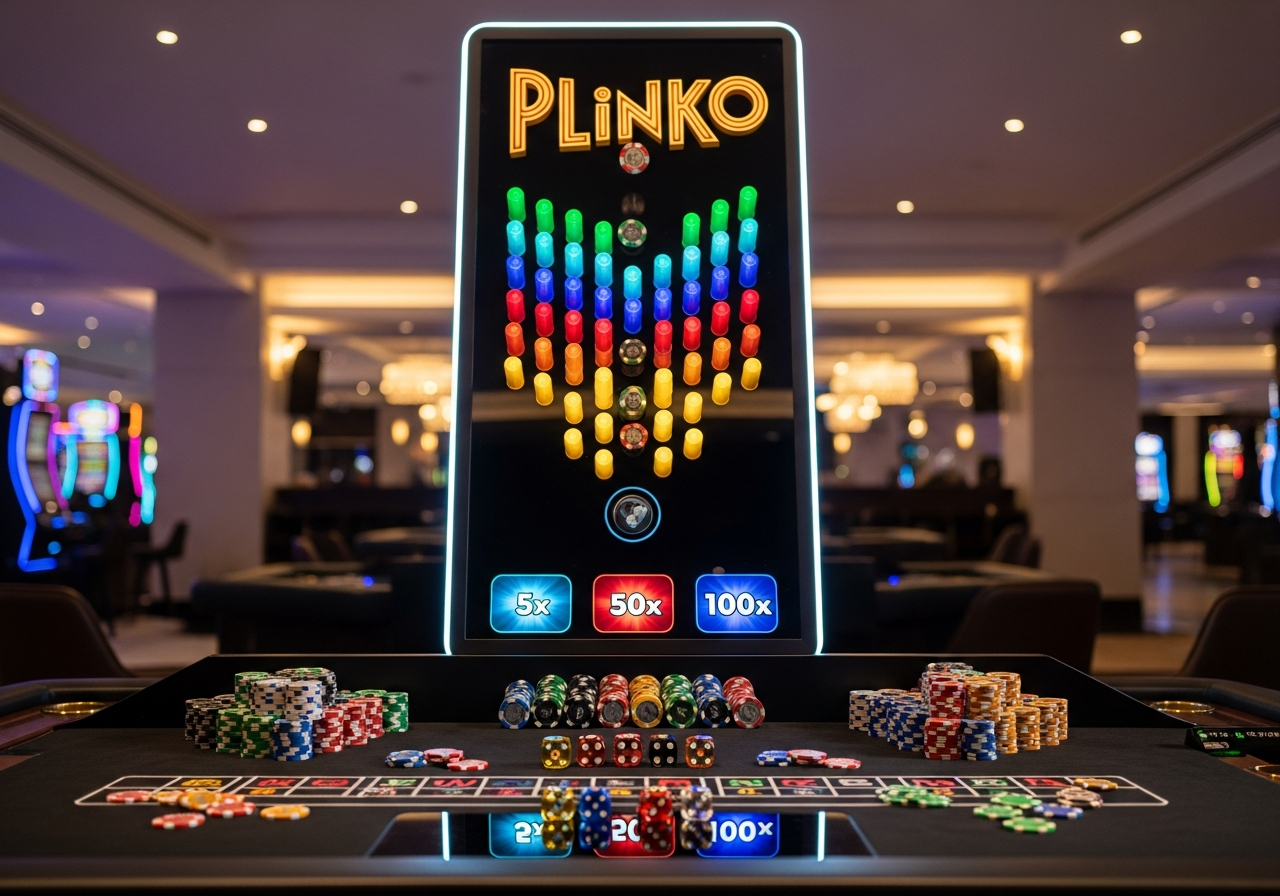
Plinko-style game shows stand apart from other live casino entertainment through their distinctive visual core: a ball or balls dropped through a pyramid-shaped grid of pegs, bouncing down probabilistic paths toward multiple payout bins at the base. This mechanic directly echoes The Price Is Right‘s iconic Plinko board, creating immediate cultural recognition for players familiar with the TV show. In casino contexts, Plinko boards vary in complexity—from simple 8-row setups with 9 payout positions to elaborate 12+ row configurations with hundreds of pegs and dynamic multiplier zones.
- Visual drop action and spectacle: Unlike wheel-based games that rely on a single spin, Plinko boards deliver continuous, mesmerizing motion as balls cascade downward. This visual engagement captures attention on busy casino floors and translates well to online streaming, making it highly shareable on social media and suitable for promotional clips.
- Variable risk and multiplier paths: Modern casino Plinko boards allow players to adjust bet sizes or choose entry points, creating a sense of control and strategy even though outcomes remain governed by RNG and fixed payout probabilities. Multiplier zones add volatility, with some paths offering 10x, 50x, or even 100x returns on favorable outcomes.
- Simple rules and low skill perception: Unlike blackjack or poker, Plinko requires no decision-making once the ball is dropped. This accessibility appeals to casual players, older demographics unfamiliar with complex table games, and new casino visitors seeking entertainment without cognitive pressure.
- Soft gambling feel: The colourful presentation, upbeat music, and celebratory host reactions frame Plinko outcomes as entertainment milestones rather than wins or losses. This psychological framing reduces perceived harm perception, making Plinko attractive to players seeking leisure rather than high-intensity betting.
- High variance and big multiplier appeal: Plinko boards are engineered to generate occasional very high multipliers (sometimes 50x–100x bet size) amid frequent smaller wins. This volatility profile excels at creating memorable moments and viral social media content while maintaining long-term house edge.
- Rapid game cycles: A single Plinko drop typically resolves in 10–20 seconds, allowing for quick succession play or extended sessions that compete effectively with fast-paced slots.
- Hybrid bonus potential: Plinko boards can be integrated into larger game ecosystems—triggered as bonuses within themed slot machines or combined with wheel spins and multiplier multiplications in compound game structures.
Core Mechanics of Casino Plinko Boards
Casino Plinko boards operate through straightforward probability mechanics rooted in the classic Galton board model. A standard board might feature 10–12 rows of pegs arranged in a triangular pattern. A ball released from the top center bounces left or right at each peg level, following a binomial distribution toward the bottom. For a symmetric 10-row board with 11 payout bins, the center bins have the highest probability of landing (around 24% each), while edge bins carry lower probabilities (around 1% each).
Payout multipliers are then assigned to each bin—typically ranging from 0.5x (losing bet scenarios) to 100x or higher on the outermost bins. The long-term return to player (RTP) is calibrated by adjusting these multiplier assignments; a well-designed Plinko board might offer 95–97% RTP to remain competitive with modern slots while maintaining a 3–5% house edge. Over tens of thousands of plays, variance averages out, though individual sessions can produce wide swings—a property that makes Plinko psychologically rewarding for players chasing big wins and commercially valuable for operators capturing spectacle moments.
Types of Live Casino Game Shows Relevant to Indian Casinos
| Game Show Type | Core Mechanic | Example Titles | Bonus Round Style | RTP/Volatility | Suitability for Indian Casino Floors |
|---|---|---|---|---|---|
| Wheel-based spin | Large rotating wheel with colored segments | Dream Catcher, Crazy Time, Monopoly Live | Multiplier wheels, mini-games, board progression | 95–97% RTP; high volatility | Excellent—strong brand recognition, proven player appeal, easy floor integration |
| Plinko-style drop | Ball cascading through peg grid | Generic casino Plinko, themed Plinko variants | Entry point selection, multiplier overlay zones | 94–97% RTP; medium-high volatility | Very good—visual novelty, soft gambling feel, family-friendly appeal |
| Dice/roll-based | Virtual or live dice roll determining multipliers | Dice Games, Sweet Bonanza Candyland | Expanding grids, cascades, multiplier combos | 96–98% RTP; variable | Good—appeals to craps/table game crossover, compact floor footprint |
| Bingo-ball draw | Automated or live ball draw from machine | Bingo-style live shows | Dauber patterns, pattern completion, community features | 90–96% RTP; lower volatility | Excellent for Class II compliant operators; fits existing bingo infrastructure |
| Hybrid RNG-plus-live | Slot bonus triggers live game show segment | Crazy Time-style hybrids, proprietary blends | Spinning wheel or board completion during triggered bonus | 93–96% RTP; very high volatility | Good—bridges slot players to live entertainment, complex approval process |
| Lightning-themed | Dynamic multiplier overlays on base spins | Lightning Roulette, Lightning Dice | Random multiplier strikes at moment of outcome reveal | 97% RTP; high volatility | Moderate—technically sound but less visually distinct than Plinko or wheels |
Wheel-Based Game Shows: Dream Catcher, Crazy Time, Monopoly Live
Wheel-based live game shows emerged first and remain the most widely deployed in online live dealer lobbies. Dream Catcher, launched by Evolution in 2017, was the first live casino game show to gain widespread adoption. It features a large, colorful wheel divided into 54 segments (numbers 1, 2, 5, 10, 20, and 40, with each number appearing multiple times). A live host spins the wheel, and players bet on which number will land. The simplicity—pure chance, no hidden mechanics—proved immediately appealing to online casino audiences.
Crazy Time, released in 2020, elevated the formula by adding four multiplier “bonus wheels” triggered when the wheel lands on a special segment. Players can then enter separate mini-games (Coin Flip, Pachinko, Cash Hunt, Wheel Modifier) that further multiply or cascade payouts. The result is a high-volatility, spectacle-driven experience with multiplier potential reaching 50x or higher. Monopoly Live applies similar logic to the Hasbro board game, with wheel spins triggering property-based mini-games and chance cards.
For tribal casinos, wheel-based shows offer proven appeal and simple operational integration. They require a live studio feed (either on-property or remote-hosted), a display screen, and betting terminals. The TV-game-show aesthetic aligns with mainstream entertainment expectations, and the wealth of online promotional content eases player education and marketing efforts.
Dice, Bingo and Hybrid RNG-Live Game Shows
Beyond wheels, dice-based game shows introduce a different mechanical flavor. Dice Games and similar titles use virtual or live dice rolls to determine multiplier chains—for example, rolling a 6 might activate a 6x multiplier on the base bet, with further rolls potentially extending the chain. These formats appeal to players familiar with craps and other dice-driven table games, bridging traditional gaming sensibilities with live entertainment framing.
Bingo-ball-draw game shows leverage automated or semi-live ball draw mechanisms, with players marking patterns on digital cards. These formats are particularly relevant to Indian casinos with established Class II bingo halls, as bingo-style mechanics may qualify for Class II regulation in many tribal jurisdictions, avoiding the stricter Class III approval process. However, integration with modern game show presentation (hosts, animations, multipliers) can blur classification boundaries, requiring careful regulatory review before deployment.
Hybrid RNG-plus-live formats are increasingly popular and operationally complex. A player spins a themed slot machine; if a bonus trigger lands, a live game show segment activates—perhaps a bonus wheel or Plinko board. The RNG determines the initial trigger, while the live component unfolds in real-time. These hybrids deliver maximum spectacle and volatility but demand careful regulatory categorization, as they span RNG slots (Class III) and live entertainment, potentially triggering additional approval layers depending on tribal governance frameworks.
Player Appeal: Why Live Plinko and Game Shows Are So Popular
- TV-show nostalgia and cultural familiarity: Players recognize Plinko from The Price Is Right and wheel mechanics from Wheel of Fortune or Deal or No Deal, lowering the mental barrier to entry. This cultural bridge makes game shows accessible to older demographics and casual players who might not identify as “gamblers.”
- Dynamic pacing and visual engagement: Spinning wheels, cascading balls, and animated bonus rounds create constant motion and anticipation. Unlike slots, which resolve in milliseconds, game shows unfold over 10–30 seconds, sustaining tension and narrative arc. This sustained engagement extends session time and creates natural “just one more round” momentum.
- Presenter-led interaction and perceived fairness: Live hosts smile, react to outcomes, and narrate results with enthusiasm. This human element builds emotional connection and trust—players feel the game is “fair” because a real person, not a cold algorithm, orchestrated the outcome. The illusion of presenter influence (e.g., choosing a bonus wheel) adds perceived agency.
- Multiplier excitement and volatility appeal: Game shows frequently feature 10x, 50x, or 100x multiplier potential. While rare, these big multipliers generate strong dopamine responses and shareable moments. Modern players compare RTPs and volatility across casinos; high multiplier potential is a major draw.
- Soft gambling narrative: Game shows are positioned as entertainment first, gambling second. This framing appeals to players (and their families) who view themselves as entertainment consumers rather than risk-takers, reducing psychological friction around gaming and extending the perceived legitimacy of extended play sessions.
- Community and social features: Some game shows include multiplayer elements—side bets, chat interactions, or leaderboards—that create a sense of shared experience. This social layer differentiates game shows from solo slot or table play, particularly appealing to younger and more digitally native audiences.
- Differentiation from commercial competitors: For tribal casinos competing against large resorts, game shows offer a unique entertainment draw unavailable at every casino. A distinctive Plinko or themed wheel experience can become a casino signature, driving repeat visitation and word-of-mouth marketing.
Soft Gambling Feel Versus Traditional Table Game Intensity
The psychological contrast between live game shows and traditional table games is stark. A blackjack table demands constant decision-making (hit, stand, double, split), mathematical cognition, and the internalization of outcomes as personal wins or losses. Many players experience table games as high-pressure, skill-dependent, and psychologically intense. Conversely, Plinko and wheel games eliminate player choice post-bet: the drop happens, the wheel spins, and fate unfolds. This passivity is liberating for casual players.
Game shows also employ softer language around outcomes. Rather than “losing $50,” a game show framing might celebrate “a $10 win” on a smaller drop, even though the net session loss is comparable. The celebratory, game-show-style host reactions and colorful animations make losses feel less consequential and wins feel more triumphant. This psychological reframing—turning gambling into entertainment spectacle—has driven adoption across demographics and geographies, making live game shows a strategic tool for casinos seeking to expand beyond traditional gaming audiences.
Regulatory and Operational Considerations for Indian Casinos
Indian casinos operate under a unique regulatory architecture balancing tribal sovereignty, federal law, and state compacts. Unlike commercial casinos, which answer to state gaming commissions, tribal casinos are primarily regulated by their own tribal gaming commissions under IGRA oversight. This creates both flexibility and complexity when introducing new games like live Plinko-style game shows.
The first hurdle is classification: does a proposed Plinko game qualify as Class II (bingo-style) or Class III (casino-style)? Most modern Plinko implementations rely heavily on RNG for payout determination, classifying them as Class III casino-style games. However, if a tribal operator frames a Plinko variant as a bingo-ball-draw game—where physical balls determine payout bins rather than RNG—it might qualify as Class II, avoiding stricter Class III approval and compact amendments. This classification decision has major operational implications, affecting licensing, technical testing, and regulatory timelines.
Once classified, tribal operators must verify that the specific game title or game mechanics are explicitly permitted under their tribal-state compact. Some compact language limits Class III games to “slots and table games”; others are more expansive, permitting “any game of chance” or “games similar to those offered in Nevada.” A game show not specifically mentioned in the compact might trigger a compact amendment process, requiring state negotiation and tribal council approval—a process that can take months or years.
Class II vs Class III Implications for Game Show Deployment
- Determine the game’s mechanical core: Analyse whether outcome determination relies primarily on RNG (Class III) or physical/pseudo-random elements like ball draws (Class II). Many Plinko implementations are hybrid, combining visual ball drops with backend RNG; classify based on what determines the payout, not the presentation.
- Review the tribal-state compact language: Consult the specific compact governing the tribe’s gaming operations. Look for explicit permission for “live games,” “game shows,” or “table games,” and assess whether the proposed Plinko format falls within those definitions. If unclear, request a written ruling from the tribal gaming commission.
- Evaluate classification benefits: Class II games often have faster approval timelines and may align with existing bingo-hall infrastructure and licensing. Class III games offer broader appeal and payout flexibility but demand more stringent technical certification and compact compliance review.
- Engage regulatory counsel and the tribal gaming commission early: Before vendor selection or floor installation, obtain preliminary approval or a non-binding ruling on the game’s classification and compliance status. This avoids costly later repositioning.
- Coordinate with the state (if compact amendment is needed): If the compact doesn’t explicitly permit live game shows or Plinko-style games, initiate a compact amendment process with the state gaming authority. Provide technical documentation, RTP studies, and operational plans to demonstrate fairness and responsible gaming measures.
- Test and certify with an accredited lab: Ensure the game undergoes independent testing by an accredited gaming lab (GLI, eCOGRA, or equivalent) recognized by the tribe and potentially by the state. Certification proves RNG integrity, payout accuracy, and responsible gambling features.
Integrating Live Game Shows into Tribal Casino Floors
Operationally, deploying live game shows on tribal casino floors requires thoughtful design and planning. Wheel-based and Plinko-style games typically occupy small footprints—a single display screen, betting terminals, and seating for 4–20 players. However, their spectacle potential means they attract crowds and create high-traffic areas. Floor designers must balance accessibility (players standing and watching) with crowd management (preventing congestion around winning sessions).
Optimal placement often positions game show zones near main casino entrances or between slot banks, maximizing visibility and traffic flow. Audio considerations are critical: upbeat game show music and host announcements attract players but must not overwhelm the broader casino soundscape. Modern installations use directional audio or zone-specific volume controls to manage ambient noise.
Staff training is essential. Unlike slots, which players understand intuitively, game shows require explanation—how to read the board, what multipliers mean, how bonus rounds trigger. Floor staff, dealers, or dedicated game show ambassadors should be equipped to explain rules, manage betting questions, and reinforce responsible gambling limits. Many tribal casinos pair game show zones with loyalty program kiosks, allowing players to enroll in points-based rewards tied to game show play.
Finally, on-property live game shows must integrate with broader responsible gambling frameworks: signage explaining volatility and RTP, automatic session limits on betting terminals, and trained staff ready to intervene if play appears problematic. Tribal values and community expectations often prioritize responsible gaming messaging more heavily than commercial casinos, making transparent communication about odds and house edge a core operational principle.
Comparing Plinko-Style Games to Other Popular Live Game Shows
| Format | Visual Core | Bonus Round Structure | Volatility Profile | Player Skill Perception | Typical Use in Indian Casinos |
|---|---|---|---|---|---|
| Plinko (drop) | Ball cascade through peg grid | Entry point selection; multiplier zones overlay | Medium-high; variance in path outcomes | Very low skill perception; luck-based | Primary floor spectacle; bridges slot players to live entertainment |
| Crazy Time (wheel) | Large spinning wheel + 4 mini-games | Bonus wheels trigger Coin Flip, Pachinko, Cash Hunt, Wheel Modifier | Very high; multiplier combos amplify swings | No skill; pure chance outcomes | Popular in lobbies; high draw but complex mechanic may intimidate |
| Monopoly Live (wheel) | Branded Hasbro board + wheel spins | Property landing, card draws, house progression | High; property multipliers compound | No skill; TV show familiarity helps | Good for themed promotions; strong brand equity |
| Dream Catcher (wheel) | Simple color/number wheel | None; single-outcome spin | Low-medium; outcomes are direct | Immediate understanding; pure chance | Foundational format; proven appeal; simple floor integration |
| Lightning Roulette (RNG overlay) | Standard virtual roulette + random multiplier strikes | Multiplier zones light up at spin outcome | High; multipliers create variance | Familiar roulette mechanic + RNG randomness | Good for table-game crossover players; less visually novel |
| Bingo-draw (ball draw) | Automated or semi-live ball draw; digital card marking | Pattern completion; community multipliers | Low-medium; limited outcome variance | Familiar to regular bingo players | Excellent for tribes with Class II structure; ties to existing bingo halls |
Volatility, RTP and Player Expectations Across Formats
Player expectations around returns and volatility have become increasingly sophisticated. Online casino communities compare RTP (return to player, the long-term theoretical payout percentage) and volatility profiles across casinos and games, sharing analysis on Reddit, YouTube, and specialized gambling forums. A Plinko board offering 94% RTP might attract value-conscious players, while a high-volatility Crazy Time variant at 96% RTP appeals to multiplier chasers accepting larger downside swings.
Tribal casinos must be transparent about these metrics. Publishing RTP, explaining volatility (e.g., “this game has frequent small wins and rare large multipliers”), and honestly framing odds as casino-favorable builds trust and compliance with responsible gambling standards. Players who understand they face a 4–6% mathematical house edge over time are less likely to develop problem gambling behaviors rooted in false expectations of winning.
Designing Live Plinko-Style Experiences for Tribal Audiences
- Align theme and presentation with tribal identity: Incorporate cultural motifs, local artists, and community stories into game boards and ambient design. A Plinko board themed around local natural features (mountains, rivers, wildlife) or tribal history creates emotional resonance while avoiding stereotypical or appropriative imagery.
- Simplify rule explanation through clear signage and demos: Place illustrated rule cards near the game, run short video loops explaining payout paths and multiplier zones, and train ambassadors to give 30-second walk-throughs. New players should grasp the game in under two minutes.
- Optimize presenter scripts and energy: Live hosts should be genuine, warm, and celebratory without seeming artificial or overly hyped. Scripts should explain outcomes neutrally (“that ball landed in the 5x zone”) while celebrating wins without mocking losses.
- Balance spectacle with responsible messaging: Pair game show areas with responsible gambling materials, helpline posters, and limits on consecutive play sessions. Some tribal casinos implement mandatory 5–10 minute breaks after large wins to prevent chase behavior.
- Create social and loyalty integration: Tie game show play to tribal casino loyalty programs, offer occasional game show promotions (e.g., “double points on Tuesday Plinko plays”), and feature game show highlights in casino marketing materials.
- Design accessible seating and standing areas: Accommodate elderly players, those with mobility limitations, and standing spectators. Consider ADA-compliant betting terminals and clear sightlines to the game board from multiple heights and distances.
- Manage audio and sensory impact: Use directional speakers and volume controls to contain game show excitement. Tribal elders, families with children, and sensitive casino patrons should feel welcome even during busy game show periods.
Theme, Presentation and Cultural Sensitivity
Tribal casinos operate as cultural and economic anchors for their communities, and game show design must respect that role. A generic, cookie-cutter Plinko board risks feeling inauthentic and culturally disconnected. Instead, tribal operators should collaborate with local artists and cultural advisors to create bespoke themes.
Examples might include: a Plinko board framed as a “River Journey” with balls bouncing through imagery of local waterways and fish, a “Mountain Path” ascending tribal sacred peaks, or a “Harvest Celebration” with agricultural motifs and seasonal color shifts. These culturally rooted themes create a sense of place, pride, and distinctiveness—qualities that drive repeat visitation and community support for tribal gaming operations.
Equally important is avoiding harmful stereotypes or appropriative imagery. Plinko boards should not employ indigenous headdresses, war paint, or romanticized “noble savage” tropes. Instead, focus on authentic tribal art, language, and storytelling, possibly partnering with tribal cultural committees to vet designs before implementation.
Educating Players on Mechanics and Responsible Play
Player education is critical given Plinko’s appeal to casual, potentially inexperienced gamblers. Many players unfamiliar with volatility may not realize that frequent small wins (0.5x–2x) can average to a net loss over time if initial bets are large. Tribal casinos should implement multi-channel education:
At the game: Clear signage displaying RTP (e.g., “95% return to players over time”), volatility level (e.g., “Medium-High: expect occasional large wins and frequent smaller outcomes”), and expected loss per session at average bet sizes. Example: “At $5 per play, expect an average loss of $0.25 per play (5% house edge) over 100 plays = $25 loss.”
Onboarding and loyalty programs: When players join the casino loyalty program, provide written or video education on how Plinko boards work, what multipliers mean, and responsible betting practices. Emphasize time and money limits, and encourage bankroll discipline.
Staff conversations: Train floor ambassadors and customer service staff to discuss odds with players in plain language, avoiding jargon. Normalize conversations about losses and set boundaries: “Plinko is fun entertainment, but the house always has an edge over time. Set a budget and stick to it.”
Examples of Game Show Adoption in and Around Indian Casinos
| Region/Tribal Market | Typical Game Show Offerings | On-Property vs Online Delivery | Notable Entertainment Strategies | Room for Plinko-Style Expansion |
|---|---|---|---|---|
| Southwest (Arizona, New Mexico) | Live bingo halls, slots, limited live dealer tables | Primarily on-property; emerging online bingo apps | Event-driven gaming (tournaments, seasonal promos), cultural performances alongside gaming | High—casinos seeking entertainment differentiation; Plinko boards would complement existing bingo infrastructure |
| Pacific Northwest (Washington, Oregon, California tribes) | Slots, table games, live poker rooms, occasional live dealer feeds | Hybrid: on-property and remote-hosted online options | Sportsbook integration, entertainment venue partnerships, live performances | Very high—tech-savvy demographic familiar with online games; Plinko adoption likely if properly branded |
| Northern Midwest (Minnesota, Wisconsin) | Extensive slots, bingo, table games, some live dealer | Mostly on-property; limited online (state restrictions) | Hospitality bundling (hotels, dining, shows), loyalty program depth | Moderate—conservative player base; Plinko works as entertainment add-on alongside existing games |
| Oklahoma/Texas | Historic bingo and Class II; modern Class III gaming | Predominantly on-property | Competitive gaming (poker series, slots tournaments), high-volume slot focus | Moderate—Class II culture strong; bingo-style Plinko (ball-draw variant) may gain adoption faster than pure RNG |
| Eastern Seaboard | High-stakes table games, premium player experience | On-property, minimal online | Luxury hospitality, celebrity entertainment, high-roller targeting | Moderate—premium positioning may favor live dealer tables; game shows positioned as secondary entertainment |
Leveraging Existing Bingo and Variety Games for Show-Style Formats
Many Indian casinos already operate large bingo halls with Class II gaming licenses, making them ideal candidates for Plinko-style game show adoption. A bingo-hall operator could introduce a “Bingo Plinko” variant: physical or digital ball draws determine which payout multiplier zone applies to bingo card patterns. This hybrid approach keeps the Class II bingo foundation while layering in Plinko’s spectacle and multiplier potential.
Alternatively, a tribe with strong Class II heritage could introduce a “live ball draw” Plinko board, where an on-property host (or remote-fed host) draws numbered balls from a cage, with drawn numbers determining the ball’s path through the Plinko grid. This maintains the participatory, auditable quality of ball-draw games while delivering modern game show presentation. Such hybrid strategies allow tribes to modernize player experiences while respecting existing regulatory frameworks and vendor partnerships.
Marketing and Content Strategy Around Live Plinko Game Shows
SEO Clusters: Game Show, Indian Casino and Plinko Keywords
A comprehensive SEO strategy for tribal casinos offering live game shows should build semantic clusters around three core keyword families: live casino game shows, Plinko casinos, and Indian casino gaming.
Live casino game show cluster: Target searches like “live casino game shows,” “best live game shows online,” “Crazy Time casino,” “Monopoly Live,” “Dream Catcher game,” “live dealer game shows,” and “how to play live casino games.” Content should explain game mechanics, compare formats, and highlight the presentation and entertainment value that differentiates game shows from traditional slots.
Plinko casino cluster: Capture searches including “Plinko casino,” “Plinko game show,” “how to play Plinko,” “Plinko odds,” “Plinko RTP,” “best Plinko casinos,” and “Price Is Right Plinko.” This cluster should bridge nostalgic TV references with modern casino mechanics and probability education, positioning content as both entertaining and educational.
Indian casino and tribal gaming cluster: Address searches like “Indian casinos near me,” “tribal casinos,” “Native American gaming,” “Class II vs Class III gaming,” “best Indian casinos,” and location-specific queries (“Arizona tribal casinos,” “Minnesota tribal casinos,” etc.). Content should explain IGRA, discuss the unique cultural and economic role of tribal gaming, and position tribal casinos as distinct, community-centered alternatives to commercial resorts.
By weaving these clusters together—”live game shows in Indian casinos,” “Plinko tribal casinos,” “how tribal casinos use game shows to entertain players”—operators and gaming content platforms can rank for high-intent searches and establish authority as educational resources on the intersection of tribal gaming and modern entertainment.
Storytelling Hooks Borrowed from TV Game Shows
Storytelling amplifies content engagement and SEO value. Rather than writing purely functional game guides, leverage narrative arcs borrowed from beloved game shows.
The “Price Is Right” angle: “How Plinko Became America’s Favorite Casino Game—From TV to Tribal Casinos” positions Plinko as a cultural icon with deep TV roots. Content could feature clips comparing The Price Is Right Plinko (free play, no money) with casino Plinko (real stakes, multipliers), exploring how the same mechanic carries vastly different emotional weight in different contexts.
The “Wheel of Fortune” angle: “Spinning for Fortune: How Wheel-Based Casino Game Shows Create Big Wins” tells stories of unlikely multiplier chains and surprise bonuses. Humanize through player testimonials, highlight the psychological appeal of wheel mechanics, and explain the variance that makes occasional big wins possible.
The “Deal or No Deal” angle: “Negotiating Odds: Live Game Shows as Modern Casino Entertainment” examines how game shows create tension and narrative momentum. Content could analyze the decision trees in bonus rounds, explain host psychology and its effect on player perception, and position game shows as a modern evolution of classic game show drama.
The responsible gaming angle: “Behind the Lights: How Tribal Casinos Balance Entertainment and Player Protection in Live Game Shows” tells stories of tribal gaming commissions, cultural sensitivity, and responsible gambling frameworks. This positions tribal casinos as thoughtful stewards of gaming, differentiating them from commercial resorts and building trust with community stakeholders.
Future Trends: Plinko-Style Innovation in Tribal Gaming
The next wave of Plinko-style innovation will likely center on deeper integration with digital ecosystems and hybrid gameplay. Expect increasingly sophisticated Plinko boards with dynamic peg arrangements, variable gravity effects, and augmented reality overlays that change board aesthetics based on themed events or player loyalty status. Some tribal casinos may experiment with mobile Plinko apps that sync with on-property boards, allowing players to place remote bets during casino visits or build hype for upcoming visits.
Hybridization will accelerate: Plinko boards triggering bonus spins, slots leading to live Plinko drops, and Plinko outcomes feeding leaderboard competitions. These compounded mechanics create longer play sessions and cross-game excitement, though they demand careful regulatory review to ensure they remain within tribal gaming classifications.
Theming will become increasingly culturally specific. Rather than generic Plinko boards, tribal casinos will commission custom boards featuring tribal art, local landscapes, and community stories. This moves Plinko from a generic casino game to a signature tribal gaming experience, similar to how Monopoly Live became a branded cultural moment.
Finally, responsible gambling innovation will intensify. Expect AI-driven monitoring of individual players’ session patterns, with automatic offers of breaks or gambling limit adjustments before risky behavior escalates. Tribal gaming commissions are likely to mandate pre-game educational modules for first-time Plinko players, ensuring informed consent before high-volatility play.
Balancing Innovation With Tribal Values and Regulation
- Evaluate new games against tribal gaming policy and cultural goals: Before adopting any new Plinko variant or game show format, assess alignment with the tribe’s published gaming policies, community values, and long-term economic strategy. Is this innovation a core revenue driver or merely chasing trends?
- Prioritize transparency and responsible gambling: Choose vendors and games that meet or exceed responsible gambling standards—automatic session limits, RTP certification, player education tools, and staff training frameworks. Innovation should enhance player protection, not undermine it.
- Engage tribal elders and community advisory boards: Seek input on cultural theming, community impact, and presentation style before full deployment. Game shows targeting tribal members should respect cultural sensibilities and avoid imagery or narratives that conflict with tribal identity.
- Plan for technical and regulatory robustness: Ensure new games undergo rigorous technical testing, obtain tribal gaming commission pre-approval before vendor contracts, and include regulatory change provisions in vendor agreements (if tribal-state compacts are later amended, the vendor should support re-certification at no added cost).
- Monitor player outcomes and community impact: After deployment, track player problem gambling referrals, session duration patterns, and community perception through periodic surveys. If Plinko or game shows correlate with increased problem gambling rates, be prepared to adjust accessibility, limit bet sizes, or remove the product entirely.